Over the years of studying philosophy, I’ve seen quite a number of classifications that categorize them. I’ve come across an interesting one in Rorty’s seminal Philosophy & the Mirror of Nature, in which he distinguishes systematic and edifying philosophers. The distinction founders on those whose work is constructive and those that are reactive. Continue reading Systematic? Edifying? You decide!
Category: Philosophy
reflections about the art of reflecting…
the Book of Truth

(a classic from my heydays on IIDB, 6 years ago)
One day in heaven, the philosopher was walking with God, waxing philosophical.
God: Everything you ever wanted is here.
Philosopher: Everything? Do you mean the Truth, too?
God: Why, yes. If its true, its in the Book of the Truth.
Philosopher: What’s that?
God: Come follow me.
They walk towards the Official Library of Heaven, where all the books that have ever existed, or will exist, are located. In the center there’s a tall podium with the biggest book ever lying atop of it, and open. The golden letters are printed in type 6 font, new roman times style, on the finest paper.
God: Every single truth is in this book.
Philosopher: Indeed? All true sentences?
God: But of course. I am essentially omniscient and I also know this to be true. That’s also in there!
Philosopher: Au contraire, mon deux.
God: What?
Philosopher: I can think of at least one true sentence that cannot be in there.
God: Surely thou jest!
Philosopher: Not at all, your eminence.
God: Alright, what is this sentence? I warn you it cannot be meaningless. I am wise to the art of sophistry!
The philosopher takes a piece of a paper and writes “This statement is not in the Book of Truth.” God’s eyes bulge, and He begins to stammer.
Philosopher: Is this sentence in there? If so the book contains a falsehood. If not, then the book does not have all true sentences. Therefore it is not the Book of Truth.
God: Oh, dear. I hadn’t thought of that. I should have never made that Cretean….
Philosophy of the Gods, part II
(For part one, go here)
ELDER GODS
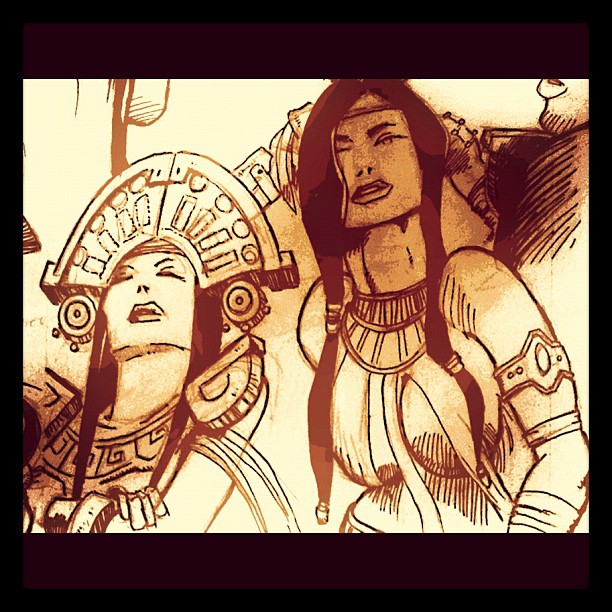
Their immortal hearts have been seared and hardened by an insurmountable evil that makes them immune to all fantasies & hallucinations of gods who still believe in ideals. Elder gods reject Cartaphilus, that dangerous prophet, and the most audacious thinker of delirious times.
The elder gods are typically radical skeptics & lovers of doubt. Instead of an impetuous glorification of life, these elders have a disillusioned outlook that considers themselves to be superior skeptics and exorcists of all certainty & conviction. Their observations are fueled with the abysmal mechanisms of doubt – an antiseptic that pacifies the spirit and detaches it from any vital stakes. Continue reading Philosophy of the Gods, part II
Truth? Pshaw!

While vacationing in Italy, I had the opportunity to flex a couple of neurons. My family is full of devout Catholics, and my youngest aunt Costanza (Costu) has the “gift” of speaking in tongues. That means the hardcore Catholics pray with her, and sometimes that sets her off in a indecipherable tongue-speaking frenzy. My uncle Michael can interpret her, so the message isn’t lost.
Moreover, Costu is also intelligent, having graduated from MST in Rolla. So she wanted to discuss philosophy with me, and she wanted to know what was my “truth.” It was early in the week, and I thought it would be a good idea to get this over with so we all can enjoy our fantastic resort.
As somebody well read in post-modernism, asking the very question “truth” sets off alarms. Such questions like “what is X” are classic questions of philosophy, but after Nietzsche, they no longer have any place in our society – all and any answer has no credibility – but I couldn’t answer like this to my Aunt. So I had to speak in the right language, and speak about the game of philosophy. Continue reading Truth? Pshaw!
Reading Rortys Philosophy & Mirror of Nature
I’m still here in Italy on vacation, but I’ve kept on reading PaMoN, and currently I am on Part II (Theory of Knowledge).
Before we get into the nitty gritty, i have something to admit. For years I’ve always admired Rorty, and I’ve read his later works (Consequences of Pragmatism, several essays from Philosophical Papers, the later collected works) in order to combat those blinkered Platonists and recalcitrant analytical philosophers on the internet. It was too much fun slapping them silly for clinging on to outdated and outworn models of philosophy, when the game has obviously passed them by! But I never read his magnum opus, PMoN, till now. Yeah, yeah. Continue reading Reading Rortys Philosophy & Mirror of Nature
Fingersmiths “R” Us
Cast:

Bob – a short story author, published a novel

Erik – a screenplay writer

chez moi – a graphic novelist
Setting:
Fred 62 Diner in LA

Yesterday, at 2pm, I arrived at the diner mere moment before Erik did, despite the best efforts of the traffic gods and an unreliable GPS. We agreed to sit outside, and after we obtained refreshments, the conversation lurched immediately into a “whatcha done lately?” mode. Erik is a filmmaker who desires greater control over his craft, so he decided to break into script writing.
After taking turns in exchanging horror stories about grad school, and before we ran out of gas, Bob made his grand entrance. He’s a middle aged man with the wittiest sense of humor this side of George Carlin, or an American version of Lord Henry from the Picture of Dorian Gray. We spoke a bit about the goals of the club, what we expected from it, and what we hope to gain from each other, and so forth. Continue reading Fingersmiths “R” Us
Philosophy of the gods, part 1
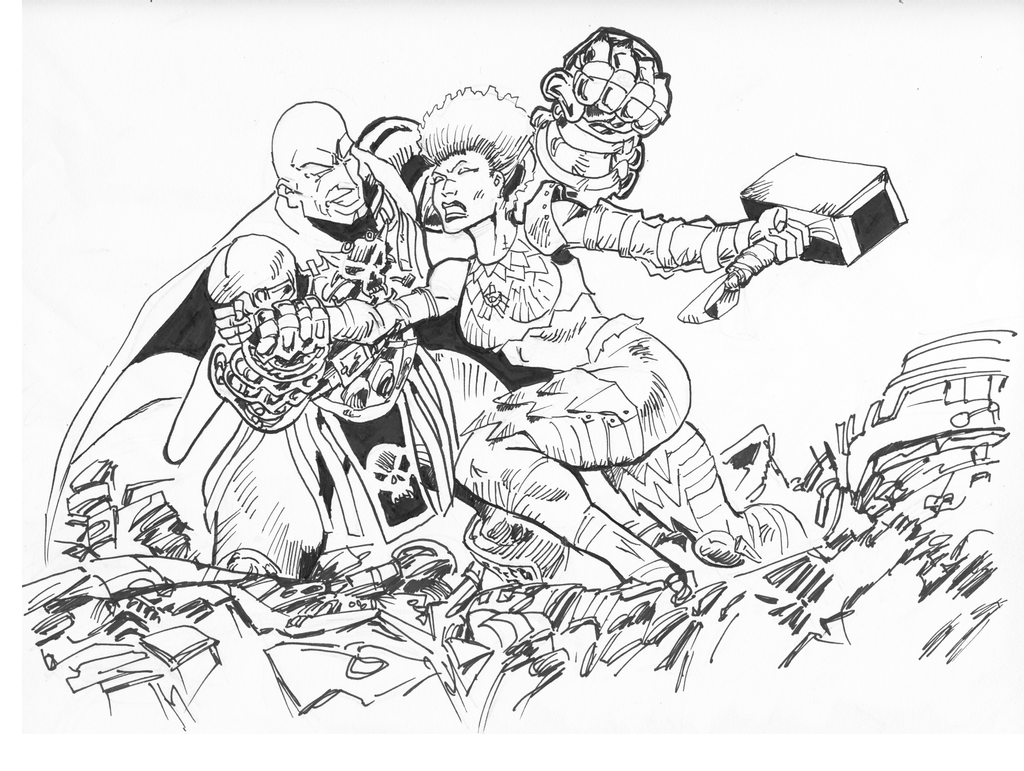
In this blog I will be drawing a distinction between two philosophies – one espoused by Kaeli and her guru, Cartaphilus, and the other, by the Elder gods. (Click here for Part 2) Hopefully this will explain how Kaeli’s worldview compares and contrasts with those of the elder gods.
The insurgents
Kaeli’s innermost beliefs are buttressed and articulated by the radical ideas of the anarchist, Cartaphilus. The elder gods, on the other hand, serve as the antithesis to her defiant stand, as the wizened cynics who disdain the fervor of youth. Continue reading Philosophy of the gods, part 1
You don’t have to be a cynic

Becoming a cynic is not an indication of a failure of character, or an anomalous individual event in today’s culture, for it is actually symptomatic of modern culture. Cynicism is essentially the result of the Enlightenment, which spelled the end of Christian dogma by destroying its ideals, absolutes, truths. As the Enlightenment progressed in its demystification of ideals, nihilism emerged form its wake. But one ideal was spared: the subject, which grounded all critiques and including positive ideas like Kantian ethics.
Prior to the Enlightenment, Christian metaphysics was true (i.e., the bible holds truths, the word of God, etc.). But the Enlightenment brought to the end to all that with critiques that decimated these aforementioned absolute truths. However, where the enlightenment has been a “melancholy science” (pace Adorno) it only exacerbates melancholy. We need something that doesn’t depress us and sinks us into cynical reasoning. We need a new critique that’s also a gay science, as opposed to the sad sciences of the enlightenment that took away all the ideals we used to believe in. Sure, this critique is also an attack, but it holds an attitude against making people miserable or depressed. Continue reading You don’t have to be a cynic
A dogmatic view of the Two Dogmas

In the concluding section of the Two Dogmas of Empiricism, Quine describes our entire knowledge as a “man made fabric,” (Two Dogmas of Empiricism, p. 39) an epistemological system that’s essentially a human construct consisting of statements, but one that’s constrained or limited by the vast accumulation of experience. When new experience that’s not confirmed or compatible with the existing construct occurs, there are repercussions that alters statements within the construct, and in turn, causes a ripple effect that changes other “logically connected” (p. 39) statements. Continue reading A dogmatic view of the Two Dogmas
Carnap and objectivity in science
In the Logische Aufbau der Welt, Rudolf Carnap was concerned with the objectivity of science, and how his rational reconstruction, could successfully explain why science is objective, despite starting with an autopsychological basis. In section 66, Carnap raises the challenge his system must solve: How can science consist of “intersubjective valid assertions,” (Logische, p. 106) when all physical objects are constructed from subjective experience? Continue reading Carnap and objectivity in science