The Opium of the deaf community?

The other day I came across a clever title of a book by Raymond Aron: The Opium of the Intellectuals. It was a polemic directed at Marxism, and argued that it was the opiate of intellectuals. The reason it’s clever is because Karl Marx originally claimed that religion was the opiate of the masses. Continue reading The Opium of the deaf community?

Game of Thrones episode 2: Kingsroad

Last week we had lil’ boy-tossing from buildings, depraved incest, and two decapitations. This week we have wolf garroting, disfigurement, little girls being called cunts, death by trampling and a revolutionary sex position that involves… eye contact!! But the best part was the bitch slapping. Who didn’t enjoy seeing that spoiled smarmy Prince Joffrey get his comeuppance, and from a dwarf no less!

Game of Thrones episode 1 review: Winter is coming

Winter is coming… and it has arrived on HBO with a thunderous bang, marrying the grand ambitions of the novel to the visceral promise of television. The first episode of the new HBO series, Game of Thrones, dispelled a lot of my ambivalent feelings about having my all-time favorite series from the fantasy genre being adapted into television format. It didn’t matter one whit that HBO had been home to some of the most brilliant television programming of the past 20 years in The Sopranos and The Wire, because adapting a book for television requires sacrifices. But I’m glad to announce that, despite the limitations of television, or perhaps because of them, the opener pulled it off.

Old Empire/Post-Empire: labelling the cultural zeitgeist

http://jennpops.com/wp-content/uploads/2012/03/breteastonellis-240x300.jpg

Bret Easton Ellis has been running with this distinction over the past year on twitter, and this week, he finally found his avatar to channel this latest label of the zeitgeist. Continue reading Old Empire/Post-Empire: labelling the cultural zeitgeist

Dr. Bauman on Deaf Gain

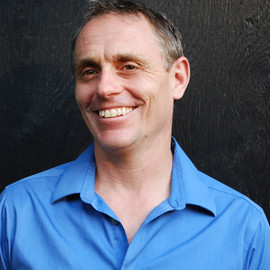
Dirksen Bauman

Last night I had the opportunity to attend a presentation by Dr. Dirksen Bauman in San Diego on Deaf Gain. My sister Rez and Bob Arnold, two heavyweights in their own rights, interjected our thoughts from time to time throughout the powerpoint presentation. In a well-constructed, seamless series of historical, analytic and evidential arguments, Dr. Bauman demonstrated how deafness as hearing loss is actually a remnant of normalcy, and is nearing its end as a valid notion. I made similar exhortations in the past, and was pleased to see such a powerful curb-stomp of a relic of modernism from an accomplished giant of academia. Continue reading Dr. Bauman on Deaf Gain

All roads lead to Ferdinand

This blog explores the radical insights of a Swiss linguist, Ferdinand Saussure, but first I will start with how linguistics changed from its early days as philology to a full-blown human science. By the 20th century, we (Americans) had become comfortable with the notion that man in general is to be defined by his language as opposed to the powers of the mind. Ideas can no longer exist in the mind without words, and nor can anyone reason without the aid of sentences. Man is the unique animal that employs a unique instrument to think with. However, such stipulations were taken further in the works of Saussure. Continue reading All roads lead to Ferdinand

On writing: own the process

Last Sunday, the writers’ club meeting started in identical fashion to the previous one: I arrived first, despite the best efforts of heavy rain and clusterfucked traffic, as well as being 30 miles away. I persuaded the hostess of Fred 62 that the rest of the party was “parking” so she sequestered me at a table in the back, serviced by a winsome waitress in racy stockings. After a few testy exchanges via iPhone, the rest of the gang arrived: Erik & then Bob bringing up the rear. We cut through the fat and through the breakfast dishes like nothing before we got to the meat of the meeting. Continue reading On writing: own the process

A new philosophy of the human sciences

Several years ago, I was in deep discussions with a theologian about the base to superstructure model. He declared it to be no longer feasible after the age of information, where the Internet has reversed this model, and the base is no longer the foundation of the superstructure. Originally in the Marxist model, the base shaped the superstructure – both relations of production (where the capitalist takes advantage of the worker) and means of production (material required to produce – machines, factories, land, owned by capitalists) determine education, religion, family, media, politics. The superstructure in turn maintains and legitimates the base. However, the Internet actually inverts this model by changing the relations of production – the worker gains power and takes advantage of capitalists, and the means of production are disseminated via the internet. Now, this was a neat revamp of a classic model, but I took another look: perhaps this is not just a cute insight, but a crucial one that applies to the rest of the human sciences. Continue reading A new philosophy of the human sciences