
“Philosophers have hitherto only interpreted the world in various ways; the point is to change it.” Continue reading Change the World?
reflections about the art of reflecting…
“Philosophers have hitherto only interpreted the world in various ways; the point is to change it.” Continue reading Change the World?

Twitter is the perfect medium for today’s over-saturated media-soaked times. Continue reading Philosophy on Twitter

The other day I got into a debate on twitter about the morality of sharing ebooks. Someone was posting free copies of Roger Zelazny’s books on kindle, and I replied that I was entitled to ebooks of the printed books I own. This writer challenged that assertion and asked for an argument. I refused to engage in his Empire-inflected moralizing, that the writer owned the medium his story is printed on, and used the Ship of Theseus example to deconstruct the notion of ownership.
Educated Americans tend to confuse morality and art, and morality for them tends to mean social consciousness which usually equals bad art.
— Bret Easton Ellis (@BretEastonEllis) November 4, 2011
This quote illustrates the problem with criticism and art today, especially when it comes to pop culture critics.

The comic book critic Kelly Thompson dropped Wonder Woman after issue #7, and explained herself in her article “Is the Destruction of the Amazons The Destruction of Feminism in DC Comics?” Basically, the writer of Wonder Woman, Brian Azzarello, has returned the titular character Wonder Woman to ancient Greek mythological roots. However, Greek mythology is much more bloodthirsty and savage than their previous incarnations, notably expressed by George Perez in the mid 80s. The Olympians of Perez seemed closer to the stoic figures of Roman mythology: certainly noble but mostly detached from the affairs of mortals. Continue reading Criticism and Pop Culture

Some years ago, Alan Moore, the acclaimed author of Watchmen and Miracleman, claimed that all comics after the 1960s were fan fiction, largely for several reasons related to the massive replacement of the original writers with a younger generation.
I will argue why he is right… and why he’s wrong. Continue reading Alan Moore and fan fiction
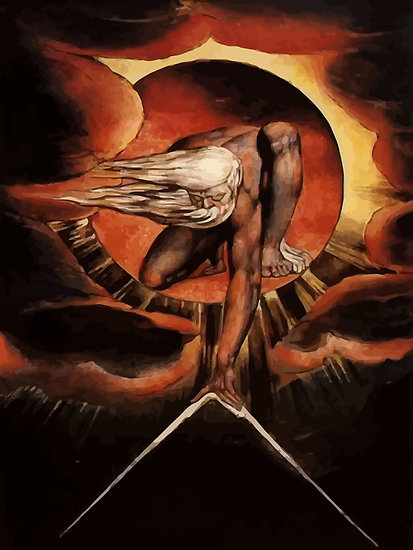
This blog focuses on the relationship between Gnosticism and antinatalism, and whether the philosopher E.M. Cioran endorses either one in his works. Thanks to ControversialPhilosophy from the Anti-Natalist and Anti-Antinatalist Debate blog, I was motivated to present a case that looked beyond cherry-picking quotes and guilt of association rhetoric, towards the historical and theological context of the writings. Continue reading Antinatalism & Gnosticism in Cioran

I am not well-versed on the anti-natalist literature, but the best way to learn about anything is diving head-first into the pool. As far as I know, Cioran was never a poster boy for antinatalism. Continue reading Antinatalism and Cioran
O sweet & deadly nihilism, what cruel beauty…
Of the four flavors of psychological states,
Three intoxicants are poisonous
Naturally & culturally, individually & socially!
First venomous flavor is the cockcrow
Of arrant meaninglessness–
A failure of Grand Purpose,
Promises a bitter aftertaste of Discouragement & melancholia!
Second rancorous flavor is the faith
In some conjectural Everything, a great Chain of Being;
A cosmic guarantor of infinite worth!
Woe unto he who loses his faith,
for he loses his own self-worth too!
Third malignant flavor is the visceral gasp
At the infinite flux, absent a safe respite;
Nothing to do but condemn all
For the sake of some Cloud Cuckoo Land,
That has no staying power whatsoever!
And the Fourth flavor? Curiously,
Neither aim, nor unity, nor Being apply!
Nothing left but a brand new tomorrow
Freed of crumbling relics & monuments of yesteryear!
Freed at last to create new selves, new worlds, new futures!

I have attached my working English translation of Clemet Rosset’s essay on Schopenhauer, The Sense of Absurd in Schopenhauer’s Philosophy. Rosset has emphasized the concept of absurdity as the chief intuition of Schopenhauer. In this fashion, Rosset has gone beyond the level of explaining odd or strange behavior, and to the root of existence itself. Therefore, to assess the strangeness of existence as a blind, ceaseless will also helps in the assessment of its particular manifestations, we ourselves as individuals.
In this essay, Rosset establishes Schopenhauer as the father of the concept of the Absurd that gained widespread circulation in mid-20th century French literature. As a French theoretician of postmodernity, Rosset pulled off a difficult job in summarizing Schopenhauer without sacrificing the 19th century German thinker’s profundity and relevance for today.